
ServicesCar Extended Warranty
Car Extended Warranty in Nassau Bay
A car extended warranty, sold as a vehicle service contract, pays for covered repairs after the factory warranty ends. We walk you through which parts each plan names, what it leaves out and what your monthly payments will be, with your vehicle's condition photographed at the start.
What an extended warranty actually covers
The factory warranty on most cars, trucks and SUVs runs out long before many drivers are ready to replace the vehicle. After that, a failed transmission valve body, a seized AC compressor or a leaking water pump is your bill. A car extended warranty moves those repair costs into a contract you pay for in predictable monthly payments.
Contracts come in two basic forms. A stated-component plan lists the parts it covers, and anything not on that list is yours to pay. An exclusionary plan covers everything except a short list of exclusions, usually wear items like brake pads, rotors, tires, wiper blades and clutch discs. We show you which type you are looking at and read the exclusions with you before you sign.
We have been in business 40 years, and we are certified in all 50 states, which matters if you drive out of state often or expect to move during the term.
What you get when you work with us
- 01
Side-by-side plan comparison
We lay out the contracts that fit your vehicle next to each other: covered components, exclusions, deductible per repair visit, and term in years and miles. You see the differences in one format instead of three different brochures.
- 02
Photo record at enrollment
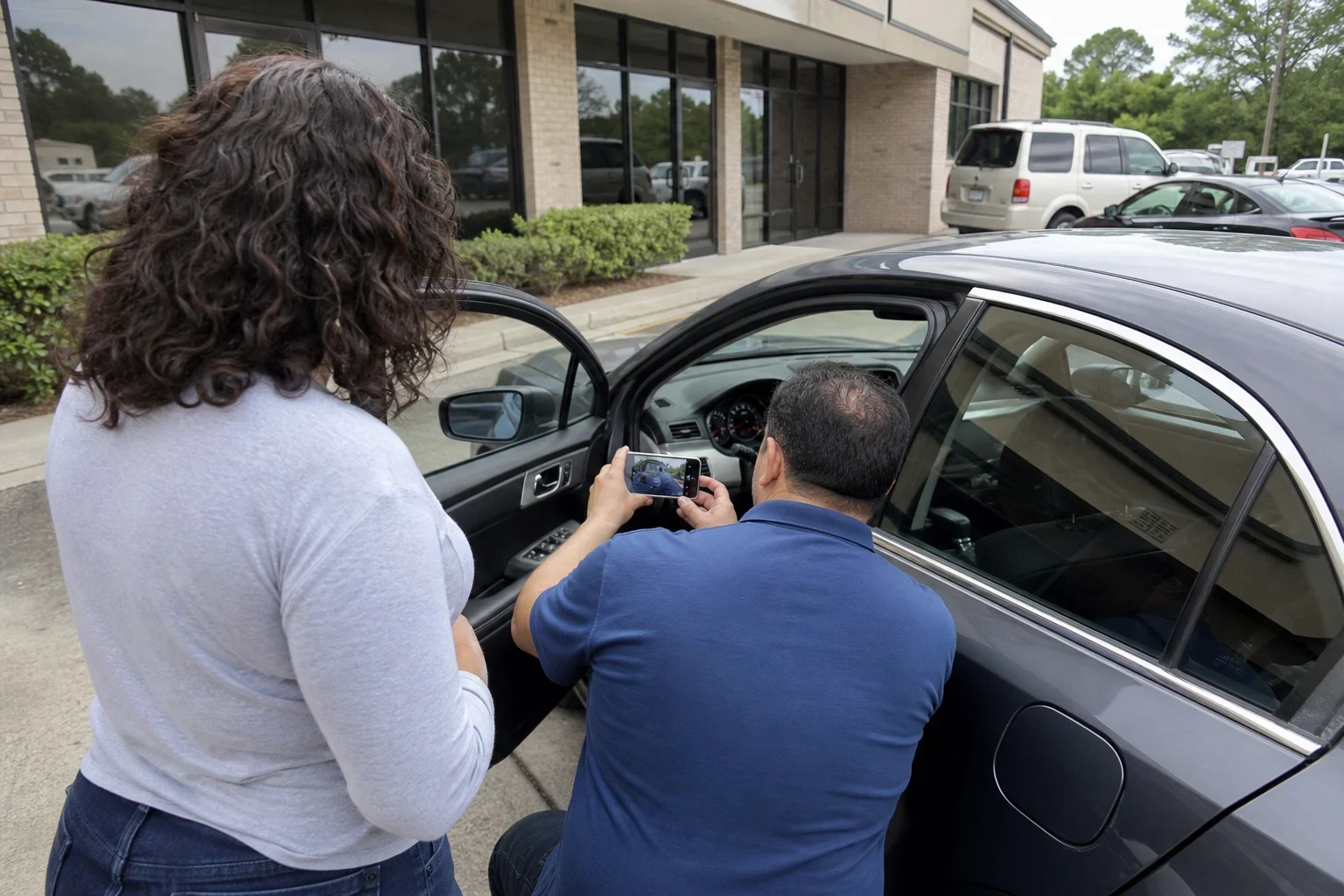
Before coverage starts, we photograph the odometer, the VIN plate and any visible leaks or dash warning lights, and keep copies of your recent service records. If a claim is ever questioned as a pre-existing condition, you have a dated record of what the vehicle looked like on day one.
- 03
Maintenance requirements in writing
Most contracts require proof of oil changes and fluid service at set intervals. We note the schedule your plan expects, so a skipped transmission fluid change does not become a reason to deny a covered repair.
- 04
Roadside assistance
Roadside assistance is covered under the warranty, so a dead battery, flat tire or breakdown away from the shop does not leave you without help. We explain what the roadside benefit includes, such as towing distance, when we go over your plan.
- 05
Payments that fit your budget
We offer flexible payment options. Most drivers spread the cost over monthly payments instead of paying for the whole term at once.
Questions about Car Extended Warranty?
Call(832) 720-6901Signs it is time to look at an extended warranty
Factory coverage is about to expire
Bumper-to-bumper warranties end at a set mileage or year count. Enrolling before that date is usually simpler, because there is no gap in coverage and fewer questions about prior problems.
The miles are adding up
Timing chains stretch, transmission clutch packs wear and rubber seals harden with mileage. Higher-mileage vehicles still qualify for many plans, though the choices narrow as the odometer climbs.
One big repair would strain the budget
If a sudden engine or transmission repair would mean a credit card balance or a skipped bill, a fixed monthly payment is easier to plan around.
Your vehicle is full of electronics
Control modules, touchscreens, parking sensors and power-folding mirrors are expensive to replace. Exclusionary plans tend to cover them; basic powertrain plans often do not.
Long months of running the AC
Gulf Coast heat keeps the compressor, condenser and cooling fan working hard for much of the year. If those parts are missing from a plan's list, you want to know before summer, not after a failure.
How enrollment works, step by step
- 1
A phone or video call
Tell us the year, make, model and mileage, and how you use the vehicle. We ask about current warning lights or known issues, because those affect which plans will accept it.
- 2
Plan comparison and free quote
We go over the contracts that fit, part by part, and explain each exclusion in plain terms. You get a free quote for each option.
- 3
Photos and records
At our office or over video, we photograph the odometer, VIN and visible condition of the vehicle, and gather your service history. All of it goes into your file.
- 4
Contract and payment schedule
You choose a plan and a payment schedule. We point out the waiting period if your contract has one, and explain exactly how to start a claim when something breaks.
What sets the price of a car extended warranty
There is no single price for an extended warranty, because each contract is priced to the vehicle and the coverage chosen. We explain every factor on your quote so you can see what you are paying for. Changing one choice, like the deductible, can move the monthly payment more than most people expect.
- Make, model and known weak points
- Vehicles with costly parts or common failure points, such as some turbocharged engines or continuously variable transmissions, cost more to cover.
- Age and current mileage
- The older the vehicle and the more miles on it, the more likely a component fails during the term, and the price reflects that risk.
- Coverage level
- A powertrain plan covering the engine, transmission and drive axles costs less than an exclusionary plan that also covers electrical, AC and steering parts.
- Term length
- More years and miles cost more in total, though a longer term can lower the cost per month of coverage.
- Deductible per repair visit
- A higher deductible lowers the monthly payment. A lower one costs more each month but less when a repair happens.
Common questions about extended warranties
Will an extended warranty cover a wreck or hail?
No. Your regular car policy handles damage from collisions, theft and storms. A car extended warranty handles mechanical and electrical failures, such as an alternator that quits or a transmission that will not shift. Since they protect against different things, many drivers keep both.
Can an older car with lots of miles be covered?
In many cases, yes. Plenty of plans take older, higher-mileage vehicles, although the choices tend toward powertrain coverage. When you call, we find out which contracts suit your vehicle before you spend any more time on it.
Does it cover something already wrong with my car?
No. Almost every contract excludes pre-existing conditions. For that reason we take photos of the vehicle and note any warning lights when you enroll, so the record shows what was there and what was not when coverage started.
Can my regular mechanic do the repairs?
Some contracts allow any qualified repair shop, and others keep you within a network. We tell you which type a plan is before you pick it, so the shop counter holds no surprises.
Is it important to save maintenance receipts?
Yes. Hold on to receipts for oil changes, fluid services and inspections. The contract administrator may ask for them on an engine or transmission claim, and missing records are among the most frequent reasons a claim gets held up.
What makes this plan different from your others?
We also have an Auto Repair Warranty and an Auto Protection Warranty, and each has its own page. During the call we can weigh all three against your vehicle and your budget.
Know what your plan covers before you sign
Tell us about your car, truck or SUV and we will compare plans part by part, with the exclusions spelled out. We work with drivers in Nassau Bay, Webster, League City and the surrounding area.